
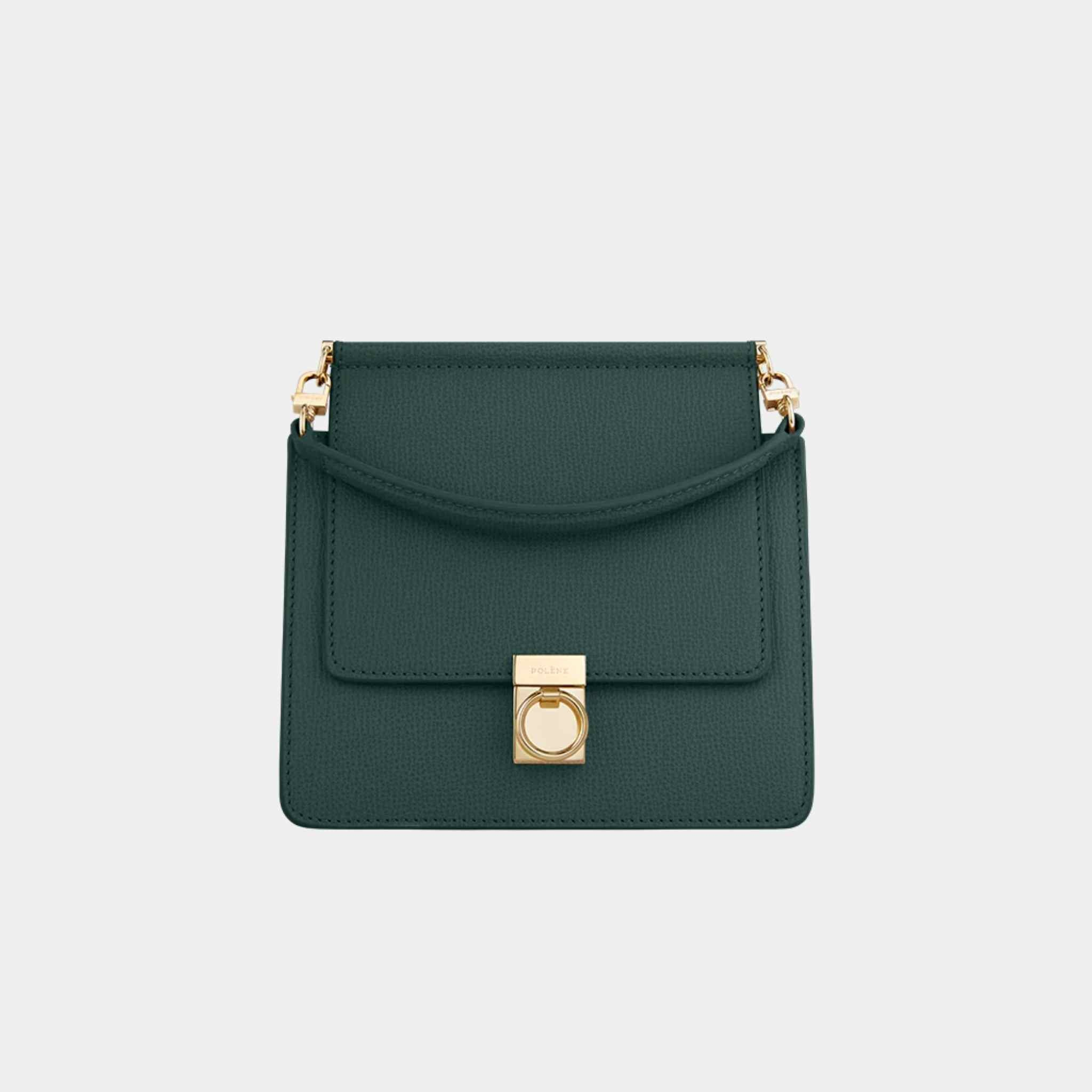
The safest way to assess a pre-owned Polène is not to search for one “magic” tell. Counterfeits vary, genuine bags show wear, and details can change between sizes, materials and production periods.
This guide helps you identify inconsistencies and buying risk. It is not an authentication certificate, and photographs alone may be insufficient for a final conclusion.
- Confirm the exact model, size, colour and material—not just the brand name.
- Compare its measurements, strap layout, closure and interior with Polène’s current official product page.
- Ask for fresh photos of the actual bag, including the base, corners, interior, stamp and hardware.
- Check whether the seller’s purchase story and any redacted receipt agree with the bag.
- Pause if the price, urgency or payment method feels designed to stop you from checking.
If two or more independent details conflict, do not talk yourself into the purchase. Ask for better evidence or use a qualified authentication service.
1. Start with provenance—not the logo
For a bag originally purchased new, the buying channel is your strongest first check. Polène states that its creations are sold through the official Polène website and its permanent boutiques, not through ordinary third-party retailers. A pre-owned shop is a reseller, so ask where the first owner originally bought the bag.
Request a redacted order confirmation, receipt or other purchase record where available. Check that the model, colour, purchase date and seller’s story agree. Evidence can also be forged, so treat it as one part of the picture rather than automatic proof.
Polène also says it does not run seasonal sales, Black Friday promotions or “influencer” discount codes. A website claiming to be an official Polène outlet with unusually deep discounts is a strong warning sign.
2. Build a blueprint for the exact model
Do not compare “a Polène bag” with random marketplace photos. Identify the exact model, size, colour and material, then open the matching product page on Polène’s official website. Compare measurable facts first:
- height, width, depth and approximate weight;
- strap or handle lengths and attachment points;
- closure type, interior pocket and lining;
- leather finish and the official colour name;
- shape, seams, panel proportions and hardware placement.
As an example, the official Cyme page lists the model’s dimensions, weight, two handle lengths, removable interior pouch, magnetic closure, certified textured Italian calf leather and velvet-microfiber lining. Those specific facts are more useful than a generic “real leather” claim.
Allow for legitimate differences between sizes, colourways, seasonal materials and older production. When the original model is no longer on the website, look for archived official materials or ask Polène customer service before deciding.
3. Inspect materials and construction as a group
Polène says its bags are handcrafted by leather-working artisans in Ubrique, Spain, using Italian or Spanish leathers. The brand also describes custom metal components and PVD plating for certain clasps, feet and strap buttons. These are useful reference points—but a genuine pre-owned bag can still have softened leather, scratches, tarnish or edge wear.
Leather & structure
Compare grain, sheen, thickness and flexibility with the exact official material. Look for unexplained plastic-like shine, bubbling or a silhouette that collapses in the wrong places.
Stitching
Look for consistent tension, tidy endpoints and symmetry between matching panels. One repair or worn stitch is not proof of a fake; repeated careless construction is more concerning.
Edges
Inspect cut edges and edge paint for even coverage, clean curves and controlled layering. Watch for rough cuts, thick drips or peeling on a bag represented as barely used.
Hardware
Check shape, scale, alignment, engraving and finish against official close-ups. Parts should operate cleanly without sharp edges, loose mechanisms or obviously mismatched colour.
Model-specific construction matters. For example, Polène describes the Cyme body as reinforced with machine stitching down the centre, while its straps are held with hand-sewn stitches. A different model may use completely different construction, so never transfer one model’s “tell” to every Polène bag.
4. Check branding—but do not stop there
Compare the logo’s letter shapes, spacing, depth and placement with sharp official photographs of the same model and production style. Look at exterior hardware, interior markings and any “Made in Spain” marking together. Misspellings, visibly crooked stamping or lettering that differs strongly from the official reference deserve closer investigation.
Packaging is supporting evidence only. Boxes, dust bags, cards and receipts can be copied or mixed between bags, while genuine pre-owned bags are often sold without their original packaging. Likewise, do not rely on a serial-style code unless the brand itself confirms how that code should be interpreted.
A slightly uneven stamp on a well-used genuine bag may be harmless. An incorrect silhouette plus wrong measurements, poor hardware, a suspicious purchase story and copied listing photos is a much stronger risk pattern.
5. Assess the listing and the seller
Even a convincing bag should come with a convincing transaction. Slow down if you see:
- a price dramatically below comparable pre-owned examples with no sensible explanation;
- only polished catalogue images, screenshots or photos found in other listings;
- a seller refusing a current photo with a handwritten date or specific angle;
- multiple supposedly rare bags in identical condition;
- pressure to pay immediately or outside a protected method;
- descriptions that contradict the bag shown.
Use reverse-image search where possible and insist on clear photographs of the actual bag. Keep the listing, chat, payment record and seller information until the transaction is fully resolved.
6. Ask for these photographs
For a remote purchase, request bright, unfiltered images of:
- front and back;
- both sides;
- base and corners;
- interior and lining;
- all logos and stamps;
- hardware engravings;
- zipper and closure;
- strap attachments;
- edge paint and key seams;
- measurement beside a ruler;
- receipt with private details hidden;
- a current timestamp photo.
A short continuous video showing the exterior, opening, interior and hardware can make image reuse or selective angles harder.
7. Decide by risk level
- Low concern: provenance is coherent, specifications match, construction is consistent and the seller provides complete evidence. Continue using a payment method with buyer protection.
- Uncertain: the bag may be genuine, but important evidence is missing or details conflict. Pause and use a reputable professional authentication service that covers the exact model.
- High concern: several independent checks fail, the seller avoids questions or the transaction feels pressured. Walk away rather than trying to explain every inconsistency.
Official references used
Polène’s official pages establish its sales channels, manufacturing approach, materials and model specifications. They do not provide a universal authentication formula, so the inspection steps above are Z&T’s independently written risk-checking framework.
This independent educational guide was written in Z&T Collections’ own words using publicly available official information reviewed on 12 August 2026. Z&T Collections is not affiliated with, sponsored by or endorsed by Polène. Brand names belong to their respective owners. Product details can change; always check the current official model page.
Know someone shopping for Polène?
Share this checklist before they pay—or message us if you need more photographs of a Z&T listing.
Share on WhatsApp